Imposing a threat on a maritime transit point that has remained free for centuries might be viewed by Iranian decision-makers as a tool for hegemony. However, it forces everyone—both regional countries and the world—to think about future alternatives.
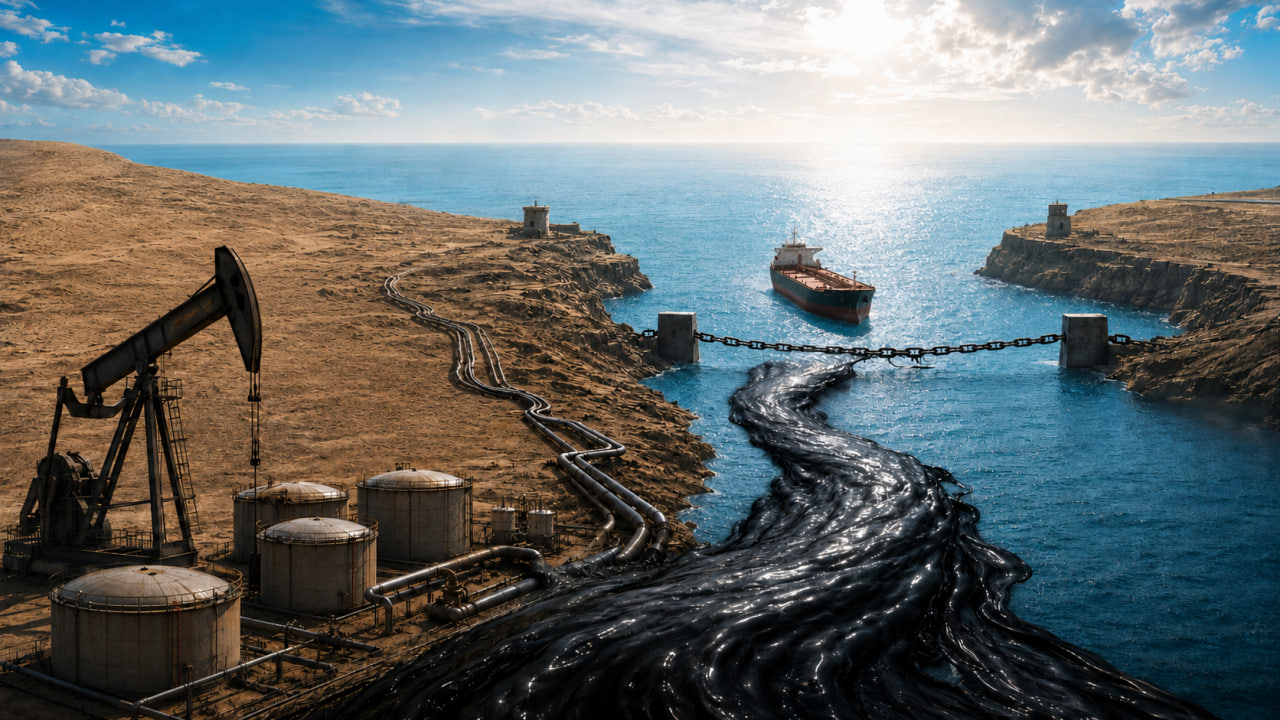
When the Ottoman forces captured Constantinople in 1453, they did not break the Byzantine chain that blocked the entrance to the Golden Horn. Instead, they bypassed it by transporting their ships and troops overland. This was not because sealing the strait was an ineffective military strategy, but because those who believed they had mastered the geography of the sea failed to recognize that geography itself can transform a source of strength into a point of vulnerability.
History does not repeat itself in exactly the same way. Today, as Iran seeks to turn the Strait of Hormuz into a permanent chokepoint for international trade and a tool of coercion in its confrontation with the United States, the logic of geography once again asserts itself. Imposing a persistent threat on a maritime passage that has remained open for centuries may appear, from Tehran’s perspective, to be an instrument of deterrence and strategic leverage. Yet in doing so, Iran is compelling both regional states and the wider international community to think seriously about alternative trade routes. Whether the current threat subsides or re-emerges, the Hormuz crisis may mark the beginning of a long-term reassessment of the function, resilience, and security of the world’s principal trade corridors.
A Different Hypothesis
Most discussions of Hormuz revolve around questions of control: Can Iran close the strait? For how long? Who possesses the military capability to reopen it? These are legitimate questions in managing the immediate crisis. They do not, however, explain the longer-term consequences that may outlast the crisis itself.
One fact is virtually beyond dispute: the Strait of Hormuz will not be allowed to remain under Iranian control. This conclusion is supported not only by international law, the strategic importance of the waterway, and the prevailing balance of global power, but also by historical precedent, the sovereign rights of the Gulf states that border the waterway, and the broader international determination to preserve freedom of navigation after Iran’s actions have inflicted damage on the global economy.
A political settlement—regardless of the path through which it is achieved—will ultimately restore freedom of navigation and end Iran’s ability to threaten this international passage. Yet even such an outcome may not restore Hormuz to its former position within regional and global strategic calculations. The most significant lesson of the recent crisis is not simply Iran’s capacity to disrupt maritime traffic, but rather the extraordinary degree to which regional and global trade has become dependent on a single strategic chokepoint.
In 2024, approximately 20.7 million barrels per day of crude oil, condensates, and refined petroleum products passed through the Strait of Hormuz. During the first half of 2025, flows remained at roughly 20.9 million barrels per day. According to United Nations estimates, the strait carries nearly one-quarter of all seaborne oil trade, in addition to substantial volumes of liquefied natural gas, fertilizers, and internationally traded goods. These figures demonstrate both strategic importance and accumulated risk, creating growing incentives to diversify transport routes.
The Strait of Hormuz will remain strategically important, but what has begun is the diversification of alternatives.
Until the recent conflict, serious discussion of alternatives remained limited. Although Saudi Arabia, the UAE, and Iraq had already explored alternative export routes, Hormuz remained the least expensive and most economically efficient maritime corridor. Consequently, debate over alternatives never gained significant momentum.
The Cost Equation Has Changed
Energy producers, importers, shipping fleets, and insurers have long recognized Iran’s ability to threaten the Strait of Hormuz. Similar threats emerged during the Iran-Iraq War (1980–1988), yet any state or non-state actor can threaten maritime chokepoints. International law therefore evolved to protect freedom of navigation and treat attempts to disrupt strategic waterways as acts requiring an international response.
Developing alternative overland and maritime corridors requires enormous investment in infrastructure, ports, railways, logistics, and international agreements. Iran’s threat to close Hormuz did not reduce these costs—it compelled governments to accept them. The possibility of confrontation encourages states to calculate military costs; repeated strategic risk encourages them to calculate the cost of permanent alternatives.
This may become the conflict’s most enduring consequence. In July 2026, following renewed Iranian attacks on commercial shipping, war-risk insurance premiums rose from roughly 2% to nearly 3% of a vessel’s value, with estimates suggesting they could reach 5%.
When the Question Changes, the Map Changes
Saudi Arabia has expanded the East-West Pipeline toward the Red Sea. The UAE has accelerated additional export capacity through Fujairah while strengthening its Arabian Sea ports. Iraq has approved preliminary studies for strategic corridors linking Basra with Ceyhan, Baniyas, Jordan, and the Mediterranean.
These projects are neither immediate nor free of political and financial obstacles. Their importance lies in establishing a strategic direction toward diversified transport networks that reduce dependence on Hormuz as a vulnerable chokepoint.
Needs That Go Beyond Cost
In July 2026, the shipping industry estimated that approximately 350,000 containers had been diverted because of the disruption. Emergency overland transport proved incapable of replacing Hormuz’s capacity. Long-term alternatives therefore represent structural changes rather than temporary emergency measures.
Trade routes have never been permanent. The Suez Canal and the Panama Canal were both built because new strategic realities justified enormous costs.
The Hormuz crisis may ultimately reshape global risk models rather than military maps. Once strategic risk materializes, it becomes embedded in pricing, contracts, business continuity planning, and transport diversification. Like the human immune system, global trade develops a lasting memory of strategic threats.
Hormuz is unlikely to lose its commercial importance soon, but over the long term the world’s dependence on it is likely to decline gradually.
The Greatest Loser
The conflict may reinforce the need for stronger international rules protecting strategic waterways.
Iran’s strategy has accelerated the transition from discussing alternative transport corridors to implementing them. Tehran assumed that the ability to disrupt a vital maritime passage would translate into lasting geopolitical leverage. Yet that assumption rests on fragile foundations.
In 1453, the chain protecting Constantinople was not destroyed—it was bypassed. Likewise, the Strait of Hormuz will almost certainly remain open to international shipping, but it may gradually lose its strategic value as an instrument of coercion while the world redraws the geography of prosperity, trade, and connectivity.


From Chokepoint to Corridors: Iran Won’t Police Hormuz
When the Ottoman forces captured Constantinople in 1453, they did not break the Byzantine chain that blocked the entrance to the Golden Horn. Instead, they bypassed it by transporting their ships and troops overland. This was not because sealing the strait was an ineffective military strategy, but because those who believed they had mastered the geography of the sea failed to recognize that geography itself can transform a source of strength into a point of vulnerability.
History does not repeat itself in exactly the same way. Today, as Iran seeks to turn the Strait of Hormuz into a permanent chokepoint for international trade and a tool of coercion in its confrontation with the United States, the logic of geography once again asserts itself. Imposing a persistent threat on a maritime passage that has remained open for centuries may appear, from Tehran’s perspective, to be an instrument of deterrence and strategic leverage. Yet in doing so, Iran is compelling both regional states and the wider international community to think seriously about alternative trade routes. Whether the current threat subsides or re-emerges, the Hormuz crisis may mark the beginning of a long-term reassessment of the function, resilience, and security of the world’s principal trade corridors.
A Different Hypothesis
Most discussions of Hormuz revolve around questions of control: Can Iran close the strait? For how long? Who possesses the military capability to reopen it? These are legitimate questions in managing the immediate crisis. They do not, however, explain the longer-term consequences that may outlast the crisis itself.
One fact is virtually beyond dispute: the Strait of Hormuz will not be allowed to remain under Iranian control. This conclusion is supported not only by international law, the strategic importance of the waterway, and the prevailing balance of global power, but also by historical precedent, the sovereign rights of the Gulf states that border the waterway, and the broader international determination to preserve freedom of navigation after Iran’s actions have inflicted damage on the global economy.
A political settlement—regardless of the path through which it is achieved—will ultimately restore freedom of navigation and end Iran’s ability to threaten this international passage. Yet even such an outcome may not restore Hormuz to its former position within regional and global strategic calculations. The most significant lesson of the recent crisis is not simply Iran’s capacity to disrupt maritime traffic, but rather the extraordinary degree to which regional and global trade has become dependent on a single strategic chokepoint.
In 2024, approximately 20.7 million barrels per day of crude oil, condensates, and refined petroleum products passed through the Strait of Hormuz. During the first half of 2025, flows remained at roughly 20.9 million barrels per day. According to United Nations estimates, the strait carries nearly one-quarter of all seaborne oil trade, in addition to substantial volumes of liquefied natural gas, fertilizers, and internationally traded goods. These figures demonstrate both strategic importance and accumulated risk, creating growing incentives to diversify transport routes.
The Strait of Hormuz will remain strategically important, but what has begun is the diversification of alternatives.
Until the recent conflict, serious discussion of alternatives remained limited. Although Saudi Arabia, the UAE, and Iraq had already explored alternative export routes, Hormuz remained the least expensive and most economically efficient maritime corridor. Consequently, debate over alternatives never gained significant momentum.
The Cost Equation Has Changed
Energy producers, importers, shipping fleets, and insurers have long recognized Iran’s ability to threaten the Strait of Hormuz. Similar threats emerged during the Iran-Iraq War (1980–1988), yet any state or non-state actor can threaten maritime chokepoints. International law therefore evolved to protect freedom of navigation and treat attempts to disrupt strategic waterways as acts requiring an international response.
Developing alternative overland and maritime corridors requires enormous investment in infrastructure, ports, railways, logistics, and international agreements. Iran’s threat to close Hormuz did not reduce these costs—it compelled governments to accept them. The possibility of confrontation encourages states to calculate military costs; repeated strategic risk encourages them to calculate the cost of permanent alternatives.
This may become the conflict’s most enduring consequence. In July 2026, following renewed Iranian attacks on commercial shipping, war-risk insurance premiums rose from roughly 2% to nearly 3% of a vessel’s value, with estimates suggesting they could reach 5%.
When the Question Changes, the Map Changes
Saudi Arabia has expanded the East-West Pipeline toward the Red Sea. The UAE has accelerated additional export capacity through Fujairah while strengthening its Arabian Sea ports. Iraq has approved preliminary studies for strategic corridors linking Basra with Ceyhan, Baniyas, Jordan, and the Mediterranean.
These projects are neither immediate nor free of political and financial obstacles. Their importance lies in establishing a strategic direction toward diversified transport networks that reduce dependence on Hormuz as a vulnerable chokepoint.
Needs That Go Beyond Cost
In July 2026, the shipping industry estimated that approximately 350,000 containers had been diverted because of the disruption. Emergency overland transport proved incapable of replacing Hormuz’s capacity. Long-term alternatives therefore represent structural changes rather than temporary emergency measures.
Trade routes have never been permanent. The Suez Canal and the Panama Canal were both built because new strategic realities justified enormous costs.
The Hormuz crisis may ultimately reshape global risk models rather than military maps. Once strategic risk materializes, it becomes embedded in pricing, contracts, business continuity planning, and transport diversification. Like the human immune system, global trade develops a lasting memory of strategic threats.
Hormuz is unlikely to lose its commercial importance soon, but over the long term the world’s dependence on it is likely to decline gradually.
The Greatest Loser
The conflict may reinforce the need for stronger international rules protecting strategic waterways.
Iran’s strategy has accelerated the transition from discussing alternative transport corridors to implementing them. Tehran assumed that the ability to disrupt a vital maritime passage would translate into lasting geopolitical leverage. Yet that assumption rests on fragile foundations.
In 1453, the chain protecting Constantinople was not destroyed—it was bypassed. Likewise, the Strait of Hormuz will almost certainly remain open to international shipping, but it may gradually lose its strategic value as an instrument of coercion while the world redraws the geography of prosperity, trade, and connectivity.
Share This Article!
Disclaimer:
The views and opinions expressed in the article are solely those of the author(s) and do not necessarily reflect Direct Policy Foundation’s position.
Text Copyright: We allow sharing of links to our published content (otherwise protected by intellectual property rights) on the condition that the content is not copied, wholly or partially, republished elsewhere, or reproduced in any form without prior consent of the Direct Policy Foundation.
Image Copyright: All images used, unless credited otherwise, are AI-generated by the Direct Policy Foundation's editorial team, and may not be copied or used outside this website without prior written consent. All rights reserved © 2026 Direct Policy Foundation
From Chokepoint to Corridors: Iran Won’t Police Hormuz
When the Ottoman forces captured Constantinople in 1453, they did not break the Byzantine chain that blocked the entrance to the Golden Horn. Instead, they bypassed it by transporting their ships and troops overland. This was not because sealing the strait was an ineffective military strategy, but because those who believed they had mastered the geography of the sea failed to recognize that geography itself can transform a source of strength into a point of vulnerability.
History does not repeat itself in exactly the same way. Today, as Iran seeks to turn the Strait of Hormuz into a permanent chokepoint for international trade and a tool of coercion in its confrontation with the United States, the logic of geography once again asserts itself. Imposing a persistent threat on a maritime passage that has remained open for centuries may appear, from Tehran’s perspective, to be an instrument of deterrence and strategic leverage. Yet in doing so, Iran is compelling both regional states and the wider international community to think seriously about alternative trade routes. Whether the current threat subsides or re-emerges, the Hormuz crisis may mark the beginning of a long-term reassessment of the function, resilience, and security of the world’s principal trade corridors.
A Different Hypothesis
Most discussions of Hormuz revolve around questions of control: Can Iran close the strait? For how long? Who possesses the military capability to reopen it? These are legitimate questions in managing the immediate crisis. They do not, however, explain the longer-term consequences that may outlast the crisis itself.
One fact is virtually beyond dispute: the Strait of Hormuz will not be allowed to remain under Iranian control. This conclusion is supported not only by international law, the strategic importance of the waterway, and the prevailing balance of global power, but also by historical precedent, the sovereign rights of the Gulf states that border the waterway, and the broader international determination to preserve freedom of navigation after Iran’s actions have inflicted damage on the global economy.
A political settlement—regardless of the path through which it is achieved—will ultimately restore freedom of navigation and end Iran’s ability to threaten this international passage. Yet even such an outcome may not restore Hormuz to its former position within regional and global strategic calculations. The most significant lesson of the recent crisis is not simply Iran’s capacity to disrupt maritime traffic, but rather the extraordinary degree to which regional and global trade has become dependent on a single strategic chokepoint.
In 2024, approximately 20.7 million barrels per day of crude oil, condensates, and refined petroleum products passed through the Strait of Hormuz. During the first half of 2025, flows remained at roughly 20.9 million barrels per day. According to United Nations estimates, the strait carries nearly one-quarter of all seaborne oil trade, in addition to substantial volumes of liquefied natural gas, fertilizers, and internationally traded goods. These figures demonstrate both strategic importance and accumulated risk, creating growing incentives to diversify transport routes.
The Strait of Hormuz will remain strategically important, but what has begun is the diversification of alternatives.
Until the recent conflict, serious discussion of alternatives remained limited. Although Saudi Arabia, the UAE, and Iraq had already explored alternative export routes, Hormuz remained the least expensive and most economically efficient maritime corridor. Consequently, debate over alternatives never gained significant momentum.
The Cost Equation Has Changed
Energy producers, importers, shipping fleets, and insurers have long recognized Iran’s ability to threaten the Strait of Hormuz. Similar threats emerged during the Iran-Iraq War (1980–1988), yet any state or non-state actor can threaten maritime chokepoints. International law therefore evolved to protect freedom of navigation and treat attempts to disrupt strategic waterways as acts requiring an international response.
Developing alternative overland and maritime corridors requires enormous investment in infrastructure, ports, railways, logistics, and international agreements. Iran’s threat to close Hormuz did not reduce these costs—it compelled governments to accept them. The possibility of confrontation encourages states to calculate military costs; repeated strategic risk encourages them to calculate the cost of permanent alternatives.
This may become the conflict’s most enduring consequence. In July 2026, following renewed Iranian attacks on commercial shipping, war-risk insurance premiums rose from roughly 2% to nearly 3% of a vessel’s value, with estimates suggesting they could reach 5%.
When the Question Changes, the Map Changes
Saudi Arabia has expanded the East-West Pipeline toward the Red Sea. The UAE has accelerated additional export capacity through Fujairah while strengthening its Arabian Sea ports. Iraq has approved preliminary studies for strategic corridors linking Basra with Ceyhan, Baniyas, Jordan, and the Mediterranean.
These projects are neither immediate nor free of political and financial obstacles. Their importance lies in establishing a strategic direction toward diversified transport networks that reduce dependence on Hormuz as a vulnerable chokepoint.
Needs That Go Beyond Cost
In July 2026, the shipping industry estimated that approximately 350,000 containers had been diverted because of the disruption. Emergency overland transport proved incapable of replacing Hormuz’s capacity. Long-term alternatives therefore represent structural changes rather than temporary emergency measures.
Trade routes have never been permanent. The Suez Canal and the Panama Canal were both built because new strategic realities justified enormous costs.
The Hormuz crisis may ultimately reshape global risk models rather than military maps. Once strategic risk materializes, it becomes embedded in pricing, contracts, business continuity planning, and transport diversification. Like the human immune system, global trade develops a lasting memory of strategic threats.
Hormuz is unlikely to lose its commercial importance soon, but over the long term the world’s dependence on it is likely to decline gradually.
The Greatest Loser
The conflict may reinforce the need for stronger international rules protecting strategic waterways.
Iran’s strategy has accelerated the transition from discussing alternative transport corridors to implementing them. Tehran assumed that the ability to disrupt a vital maritime passage would translate into lasting geopolitical leverage. Yet that assumption rests on fragile foundations.
In 1453, the chain protecting Constantinople was not destroyed—it was bypassed. Likewise, the Strait of Hormuz will almost certainly remain open to international shipping, but it may gradually lose its strategic value as an instrument of coercion while the world redraws the geography of prosperity, trade, and connectivity.
Share This Article!
Disclaimer: The views and opinions expressed in the content are solely those of the authors and do not necessarily reflect the Direct Policy Center’s position.Copyright: We allow sharing of links to our published research articles and analyses (otherwise protected by intellectual property (rights) on the condition that their content is not copied, wholly or partially, republished elsewhere, or reproduced in any form without the prior consent of the Direct Policy Center. All rights reserved © 2025
you might also like Reading
Sovereign Funds: A Gulf Lesson for Iraq (Law 2019 Without an Outlet)
Sovereign Funds: A Gulf Lesson for Iraq (Law 2019 Without an Outlet)
Iraq Seeks OPEC Deal on Blockade Oil
Iraq Seeks OPEC Deal on Blockade Oil
Tom Barrack: The Businessman Reengineering the Levant
Tom Barrack: The Businessman Reengineering the Levant
From Chokepoint to Corridors: Iran Won’t Police Hormuz
From Chokepoint to Corridors: Iran Won’t Police Hormuz
NATO in Ankara: New Security Maps on the Region’s Frontiers
NATO in Ankara: New Security Maps on the Region’s Frontiers
Iraq and the Factors Driving Reform: A Divide Between Politics and Administration
Iraq and the Factors Driving Reform: A Divide Between Politics and Administration