Iraq is demanding that it increase its share in OPEC, which currently does not have the ability to produce or export it; a fair share requires sustainable production capacity and sufficient export outlets, not just huge underground oil reserves.
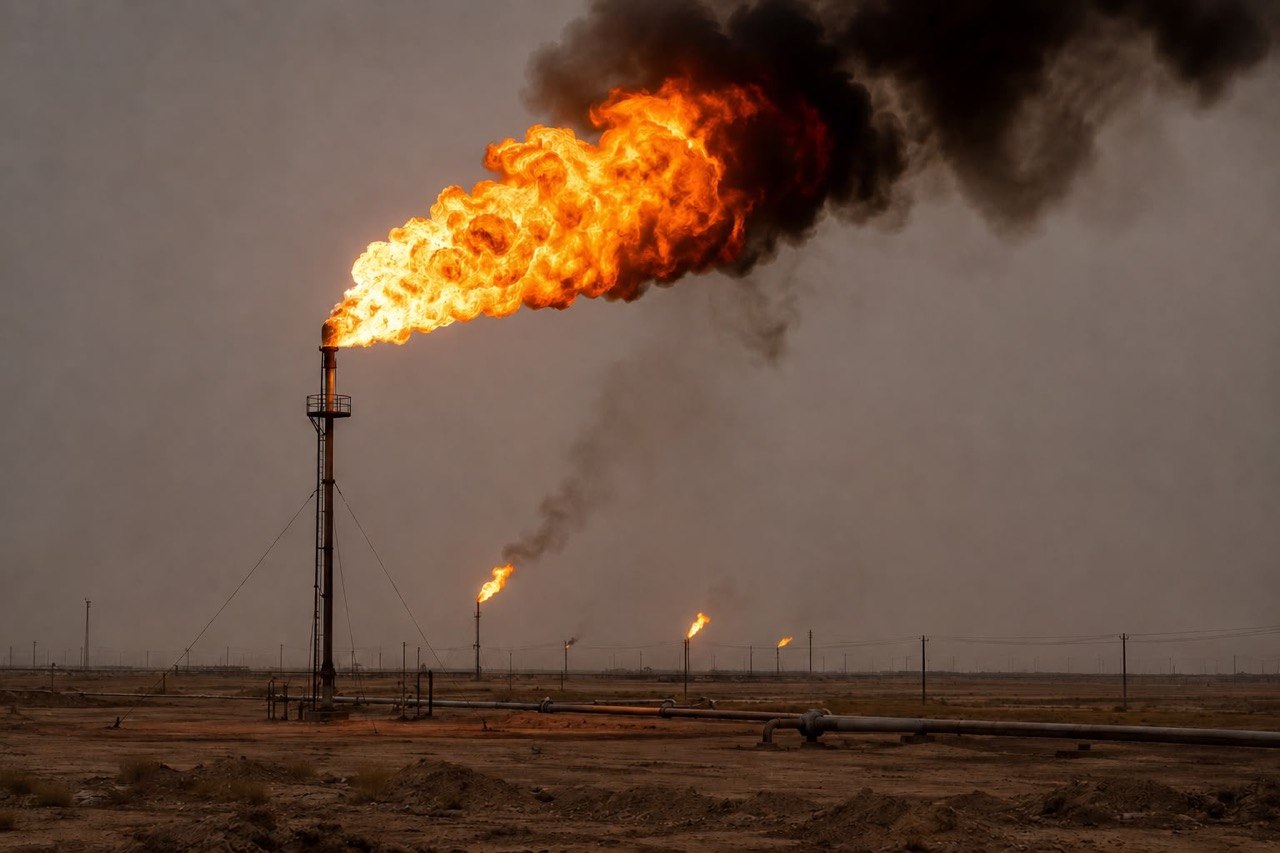
How does a country demand to raise the ceiling of its oil production, while it is unable to reach the ceiling granted to it? This irony summarizes Baghdad’s position within OPEC after the Hormuz war. Iraq’s planned production test within OPEC+ for July is 4.378 million barrels per day, while its actual production fell in May to about 1.48 million barrels, due to the disruption of exports through the Strait of Hormuz. Its maritime exports also fell in the same month to about 96,000 barrels per day, while its total exports, according to the Ceyhan line, did not exceed about 329,000, less than a tenth of pre-war levels.
However, Prime Minister Ali al-Zaidi stressed that Iraq, as one of the founders of OPEC, will remain within the organization, but demands a “fair and equitable share“.
On the other hand, officials at the Ministry of Oil spoke of studying “all options” if the quota was not raised, in a language that gained extra weight after the UAE left the organization less than two months ago.
The Iraqi demand and its relevance from the perspective of Baghdad. Iraq is a country exhausted by wars and sanctions, and its oil infrastructure has been damaged; it has large reserves that, according to his view, are not commensurate with its current share. It is also facing a severe financial crisis after losing most of its revenue. From this perspective, the quota system appears to be inequitable, or at least impractical, for a country that needs to fund reconstruction and meet the requirements of its growing population.
However, the concept of a “fair share” needs to be more precisely controlled. The size of reserves and financial need alone are not enough to set quotas within OPEC; a state’s strength is measured by its sustainable production capacity, the possibility of exporting its production, and the extent of its commitment to previous agreements. Here, Iraq faces an additional burden represented by its previous record of exceeding the established ceilings, as it was asked to compensate about 1.93 million barrels per day of accumulated excess production until mid-2026. Therefore, it is not just about a geological right to oil, but about distinguishing between three levels that are often confused in Iraqi discourse: underground reserves, sustainably productive energy, and energy that can actually be delivered to markets.
Hence the question of capability precedes the question of justice: Can Iraq produce the amount it demands? And if he produces it, does he have secure outlets for export?
The numbers answer very conservatively. The Basra Oil Company estimated that Iraq could restore its southern exports to about 3.4 million barrels per day if the Strait of Hormuz were reopened, a level lower than its pre-war production of about 4.3 million barrels. As for the Kurdistan-Cihan line, which is the working land port, the government is seeking to increase flows through it from 220,000 barrels to 770,000 barrels per day at best.
Iraq is currently transporting about 900 tanks per day of fuel oil (black oil) through Syria, equivalent to 120–140 thousand barrels. The plan to export 50,000 barrels per day of crude oil has not yet been implemented, and the exports of the port of Banias are still limited to diesel only.
The other alternatives are still in the planning process. The Basra-modern projects, the extension towards Banias and Jihan, and the revival of the disrupted tracks have not yet exceeded the preliminary agreements and feasibility studies approved with Chevron and its partners. This means that running it takes years, not months. Also, the large port of Al-Faw, for its strategic importance, will not quickly turn into an alternative oil outlet; its connection to maritime storage and export lines requires the completion of implementation phases that are still in their infancy.
Accordingly, the realistic ceiling that Iraq can reach during the next year revolves around four million barrels per day at best estimates, provided that ships do not attack in the Strait of Hormuz.
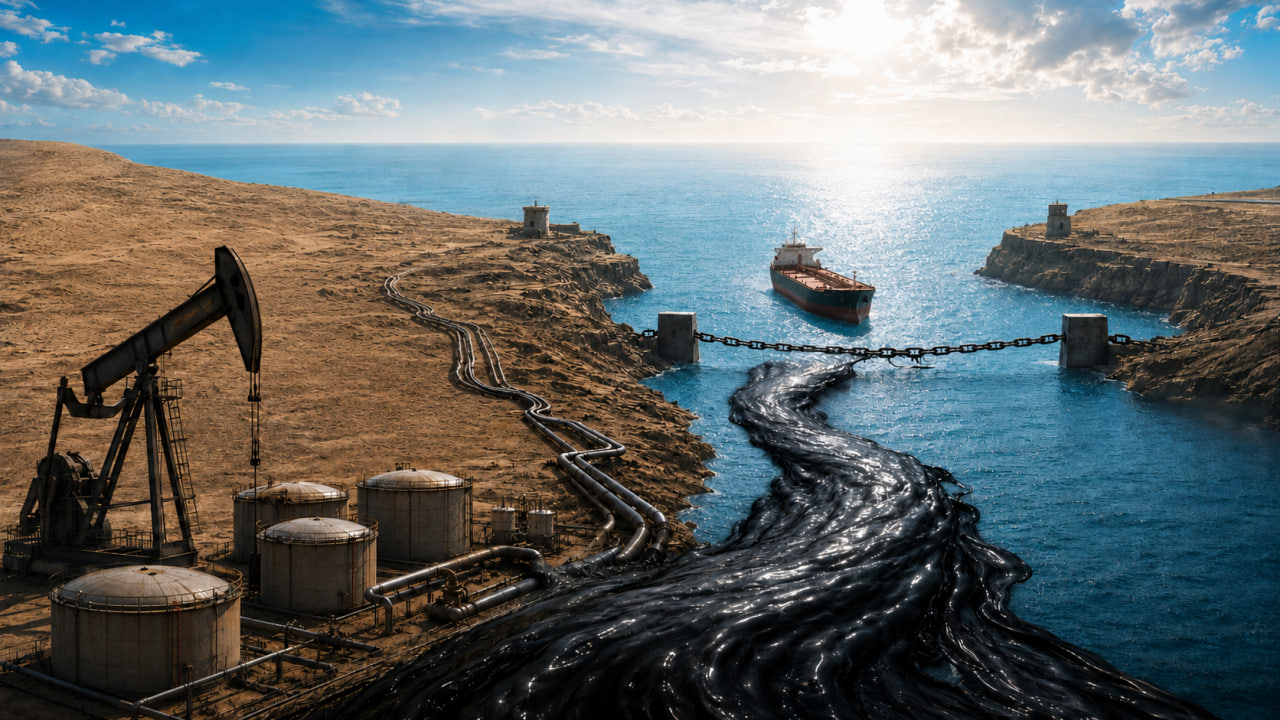
Here, the essence of the problem appears as a matter of sovereignty before it is a dispute over quotas. Baghdad has negotiated with OPEC on its right to increase production. At the same time, the key to exporting most of its oil remains pending a decision in Tehran, and with guarantees provided by foreign fleets. The Hormuz war revealed that owning oil is not equivalent to being able to employ it, and that almost total dependence on a single outlet has turned Iraq’s energy sector into a strategic weakness.
However, Iraq has a real opportunity to review OPEC+ for sustainable production capacities, in preparation for the adoption of new quota baselines starting in 2027. But improving its position in this review will not be achieved by withdrawing, but by providing physical evidence: sustainable and verifiable production capacity, finished pipelines, qualified ports, and export lanes that do not stop at closing a single strait.
Until these conditions are met, the truth remains that it is difficult to say in Baghdad: a fair share is not only given to those who claim it, but to those who can pump and market it. Iraq today demands a legitimate right, but it does not yet have all the tools of a practitioner.


Iraq Seeks OPEC Deal on Blockade Oil
How does a country demand to raise the ceiling of its oil production, while it is unable to reach the ceiling granted to it? This irony summarizes Baghdad’s position within OPEC after the Hormuz war. Iraq’s planned production test within OPEC+ for July is 4.378 million barrels per day, while its actual production fell in May to about 1.48 million barrels, due to the disruption of exports through the Strait of Hormuz. Its maritime exports also fell in the same month to about 96,000 barrels per day, while its total exports, according to the Ceyhan line, did not exceed about 329,000, less than a tenth of pre-war levels.
However, Prime Minister Ali al-Zaidi stressed that Iraq, as one of the founders of OPEC, will remain within the organization, but demands a “fair and equitable share“.
On the other hand, officials at the Ministry of Oil spoke of studying “all options” if the quota was not raised, in a language that gained extra weight after the UAE left the organization less than two months ago.
The Iraqi demand and its relevance from the perspective of Baghdad. Iraq is a country exhausted by wars and sanctions, and its oil infrastructure has been damaged; it has large reserves that, according to his view, are not commensurate with its current share. It is also facing a severe financial crisis after losing most of its revenue. From this perspective, the quota system appears to be inequitable, or at least impractical, for a country that needs to fund reconstruction and meet the requirements of its growing population.
However, the concept of a “fair share” needs to be more precisely controlled. The size of reserves and financial need alone are not enough to set quotas within OPEC; a state’s strength is measured by its sustainable production capacity, the possibility of exporting its production, and the extent of its commitment to previous agreements. Here, Iraq faces an additional burden represented by its previous record of exceeding the established ceilings, as it was asked to compensate about 1.93 million barrels per day of accumulated excess production until mid-2026. Therefore, it is not just about a geological right to oil, but about distinguishing between three levels that are often confused in Iraqi discourse: underground reserves, sustainably productive energy, and energy that can actually be delivered to markets.
Hence the question of capability precedes the question of justice: Can Iraq produce the amount it demands? And if he produces it, does he have secure outlets for export?
The numbers answer very conservatively. The Basra Oil Company estimated that Iraq could restore its southern exports to about 3.4 million barrels per day if the Strait of Hormuz were reopened, a level lower than its pre-war production of about 4.3 million barrels. As for the Kurdistan-Cihan line, which is the working land port, the government is seeking to increase flows through it from 220,000 barrels to 770,000 barrels per day at best.
Iraq is currently transporting about 900 tanks per day of fuel oil (black oil) through Syria, equivalent to 120–140 thousand barrels. The plan to export 50,000 barrels per day of crude oil has not yet been implemented, and the exports of the port of Banias are still limited to diesel only.
The other alternatives are still in the planning process. The Basra-modern projects, the extension towards Banias and Jihan, and the revival of the disrupted tracks have not yet exceeded the preliminary agreements and feasibility studies approved with Chevron and its partners. This means that running it takes years, not months. Also, the large port of Al-Faw, for its strategic importance, will not quickly turn into an alternative oil outlet; its connection to maritime storage and export lines requires the completion of implementation phases that are still in their infancy.
Accordingly, the realistic ceiling that Iraq can reach during the next year revolves around four million barrels per day at best estimates, provided that ships do not attack in the Strait of Hormuz.
Here, the essence of the problem appears as a matter of sovereignty before it is a dispute over quotas. Baghdad has negotiated with OPEC on its right to increase production. At the same time, the key to exporting most of its oil remains pending a decision in Tehran, and with guarantees provided by foreign fleets. The Hormuz war revealed that owning oil is not equivalent to being able to employ it, and that almost total dependence on a single outlet has turned Iraq’s energy sector into a strategic weakness.
However, Iraq has a real opportunity to review OPEC+ for sustainable production capacities, in preparation for the adoption of new quota baselines starting in 2027. But improving its position in this review will not be achieved by withdrawing, but by providing physical evidence: sustainable and verifiable production capacity, finished pipelines, qualified ports, and export lanes that do not stop at closing a single strait.
Until these conditions are met, the truth remains that it is difficult to say in Baghdad: a fair share is not only given to those who claim it, but to those who can pump and market it. Iraq today demands a legitimate right, but it does not yet have all the tools of a practitioner.
Share This Article!
Disclaimer:
The views and opinions expressed in the article are solely those of the author(s) and do not necessarily reflect Direct Policy Foundation’s position.
Text Copyright: We allow sharing of links to our published content (otherwise protected by intellectual property rights) on the condition that the content is not copied, wholly or partially, republished elsewhere, or reproduced in any form without prior consent of the Direct Policy Foundation.
Image Copyright: All images used, unless credited otherwise, are AI-generated by the Direct Policy Foundation's editorial team, and may not be copied or used outside this website without prior written consent. All rights reserved © 2026 Direct Policy Foundation
Iraq Seeks OPEC Deal on Blockade Oil
How does a country demand to raise the ceiling of its oil production, while it is unable to reach the ceiling granted to it? This irony summarizes Baghdad’s position within OPEC after the Hormuz war. Iraq’s planned production test within OPEC+ for July is 4.378 million barrels per day, while its actual production fell in May to about 1.48 million barrels, due to the disruption of exports through the Strait of Hormuz. Its maritime exports also fell in the same month to about 96,000 barrels per day, while its total exports, according to the Ceyhan line, did not exceed about 329,000, less than a tenth of pre-war levels.
However, Prime Minister Ali al-Zaidi stressed that Iraq, as one of the founders of OPEC, will remain within the organization, but demands a “fair and equitable share“.
On the other hand, officials at the Ministry of Oil spoke of studying “all options” if the quota was not raised, in a language that gained extra weight after the UAE left the organization less than two months ago.
The Iraqi demand and its relevance from the perspective of Baghdad. Iraq is a country exhausted by wars and sanctions, and its oil infrastructure has been damaged; it has large reserves that, according to his view, are not commensurate with its current share. It is also facing a severe financial crisis after losing most of its revenue. From this perspective, the quota system appears to be inequitable, or at least impractical, for a country that needs to fund reconstruction and meet the requirements of its growing population.
However, the concept of a “fair share” needs to be more precisely controlled. The size of reserves and financial need alone are not enough to set quotas within OPEC; a state’s strength is measured by its sustainable production capacity, the possibility of exporting its production, and the extent of its commitment to previous agreements. Here, Iraq faces an additional burden represented by its previous record of exceeding the established ceilings, as it was asked to compensate about 1.93 million barrels per day of accumulated excess production until mid-2026. Therefore, it is not just about a geological right to oil, but about distinguishing between three levels that are often confused in Iraqi discourse: underground reserves, sustainably productive energy, and energy that can actually be delivered to markets.
Hence the question of capability precedes the question of justice: Can Iraq produce the amount it demands? And if he produces it, does he have secure outlets for export?
The numbers answer very conservatively. The Basra Oil Company estimated that Iraq could restore its southern exports to about 3.4 million barrels per day if the Strait of Hormuz were reopened, a level lower than its pre-war production of about 4.3 million barrels. As for the Kurdistan-Cihan line, which is the working land port, the government is seeking to increase flows through it from 220,000 barrels to 770,000 barrels per day at best.
Iraq is currently transporting about 900 tanks per day of fuel oil (black oil) through Syria, equivalent to 120–140 thousand barrels. The plan to export 50,000 barrels per day of crude oil has not yet been implemented, and the exports of the port of Banias are still limited to diesel only.
The other alternatives are still in the planning process. The Basra-modern projects, the extension towards Banias and Jihan, and the revival of the disrupted tracks have not yet exceeded the preliminary agreements and feasibility studies approved with Chevron and its partners. This means that running it takes years, not months. Also, the large port of Al-Faw, for its strategic importance, will not quickly turn into an alternative oil outlet; its connection to maritime storage and export lines requires the completion of implementation phases that are still in their infancy.
Accordingly, the realistic ceiling that Iraq can reach during the next year revolves around four million barrels per day at best estimates, provided that ships do not attack in the Strait of Hormuz.
Here, the essence of the problem appears as a matter of sovereignty before it is a dispute over quotas. Baghdad has negotiated with OPEC on its right to increase production. At the same time, the key to exporting most of its oil remains pending a decision in Tehran, and with guarantees provided by foreign fleets. The Hormuz war revealed that owning oil is not equivalent to being able to employ it, and that almost total dependence on a single outlet has turned Iraq’s energy sector into a strategic weakness.
However, Iraq has a real opportunity to review OPEC+ for sustainable production capacities, in preparation for the adoption of new quota baselines starting in 2027. But improving its position in this review will not be achieved by withdrawing, but by providing physical evidence: sustainable and verifiable production capacity, finished pipelines, qualified ports, and export lanes that do not stop at closing a single strait.
Until these conditions are met, the truth remains that it is difficult to say in Baghdad: a fair share is not only given to those who claim it, but to those who can pump and market it. Iraq today demands a legitimate right, but it does not yet have all the tools of a practitioner.
Share This Article!
Disclaimer: The views and opinions expressed in the content are solely those of the authors and do not necessarily reflect the Direct Policy Center’s position.Copyright: We allow sharing of links to our published research articles and analyses (otherwise protected by intellectual property (rights) on the condition that their content is not copied, wholly or partially, republished elsewhere, or reproduced in any form without the prior consent of the Direct Policy Center. All rights reserved © 2025
you might also like Reading
Sovereign Funds: A Gulf Lesson for Iraq (Law 2019 Without an Outlet)
Sovereign Funds: A Gulf Lesson for Iraq (Law 2019 Without an Outlet)
Iraq Seeks OPEC Deal on Blockade Oil
Iraq Seeks OPEC Deal on Blockade Oil
Tom Barrack: The Businessman Reengineering the Levant
Tom Barrack: The Businessman Reengineering the Levant
From Chokepoint to Corridors: Iran Won’t Police Hormuz
From Chokepoint to Corridors: Iran Won’t Police Hormuz
NATO in Ankara: New Security Maps on the Region’s Frontiers
NATO in Ankara: New Security Maps on the Region’s Frontiers
Iraq and the Factors Driving Reform: A Divide Between Politics and Administration
Iraq and the Factors Driving Reform: A Divide Between Politics and Administration