Follow us on

An independent think tank for policy analysis and forecasting of political, economic, and security possibilities, challenges, and trends, it was founded by a group of international researchers
in 2025, and is registered in the United States as a civil society organization – (1319 F St NW Ste 301, Washington, D.C., 20004). The Foundation is concerned with the stability of current and future relations between the United States and the Middle East, the challenges facing the region’s countries and societies, and related international policies. Through its research groups, the Foundation produces papers, briefs, policy analyses, readings, and forecasts of future challenges. You may contact us at any time via email.
© 2026 Direct Policy Foundation • All Rights Reserved | Privacy Policy
An independent think tank for policy analysis and forecasting of political, economic, and security possibilities, challenges, and trends, it was founded by a group of international researchers in 2025 and is registered in the United States as a civil society organization – (1319 F St NW Ste 301, Washington, D.C., 20004). The Foundation is concerned with the stability of current and future relations between the United States and the Middle East, the challenges facing the countries and societies of the region, and related international policies. Through its research groups,the foundation produces papers, briefs, policy analysis, and readings and forecasts of future challenges.
Follow us on
© 2026 Direct Policy Foundation • All Rights Reserved.
An independent think tank for policy analysis and forecasting of political, economic, and security possibilities, challenges, and trends, it was founded by a group of international researchers in 2025 and is registered in the United States as a civil society organization – (1319 F St NW Ste 301, Washington, D.C., 20004). The Foundation is concerned with the stability of current and future relations between the United States and the Middle East, the challenges facing the countries and societies of the region, and related international policies. Through its research groups,the foundation produces papers, briefs, policy analysis, and readings and forecasts of future challenges.
Follow us on
© 2026 Direct Policy Foundation • All Rights Reserved.
Iran eyes a new source of power deep beneath the Strait of Hormuz
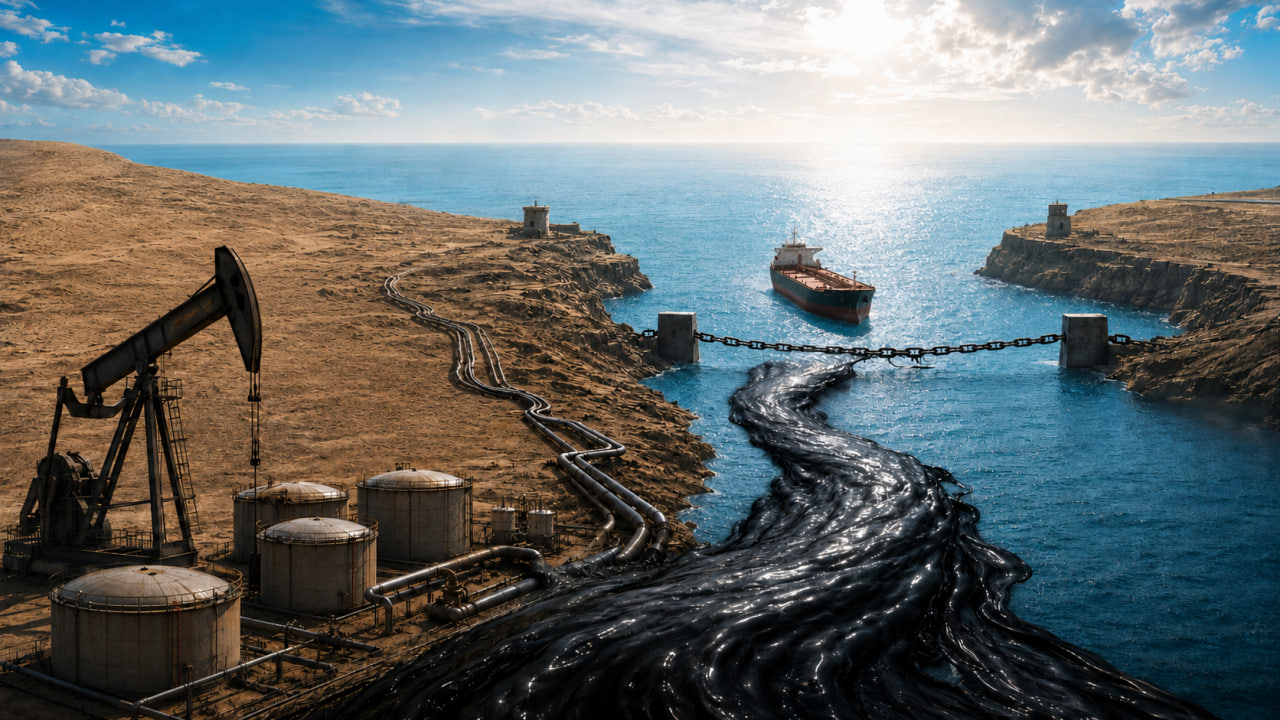
Emboldened by its successful wartime blockade of the Strait of Hormuz, Iran is turning to one of the hidden arteries in the global economy: subsea cables beneath the waterway that carry vast internet and financial traffic between Europe, Asia and the Persian Gulf.
The Islamic Republic wants to charge the world’s largest tech companies for using the subsea internet cables laid under the Strait of Hormuz, and state-linked media outlets have vaguely threatened that traffic could be disrupted if firms don’t pay. Lawmakers in Tehran discussed a plan last week which could target submarine cables linking Arab countries to Europe and Asia.
“We will impose fees on internet cables,” Iranian military spokesperson Ebrahim Zolfaghari declared on X last week. Iran’s Revolutionary Guards-linked media said Tehran’s plan to extract revenue from the strait would require companies like Google, Microsoft, Meta, and Amazon to comply with Iranian law while submarine cable companies would be required to pay licensing fees for cable passage, with repair and maintenance rights given exclusively to Iranian firms.
Share This Article!
Disclaimer:
The views and opinions expressed in the article are solely those of the author(s) and do not necessarily reflect Direct Policy Foundation’s position.
Text Copyright: We allow sharing of links to our published content (otherwise protected by intellectual property rights) on the condition that the content is not copied, wholly or partially, republished elsewhere, or reproduced in any form without prior consent of the Direct Policy Foundation.
Image Copyright: All images used, unless credited otherwise, are AI-generated by the Direct Policy Foundation's editorial team, and may not be copied or used outside this website without prior written consent. All rights reserved © 2026 Direct Policy Foundation
Iran eyes a new source of power deep beneath the Strait of Hormuz
Emboldened by its successful wartime blockade of the Strait of Hormuz, Iran is turning to one of the hidden arteries in the global economy: subsea cables beneath the waterway that carry vast internet and financial traffic between Europe, Asia and the Persian Gulf.
The Islamic Republic wants to charge the world’s largest tech companies for using the subsea internet cables laid under the Strait of Hormuz, and state-linked media outlets have vaguely threatened that traffic could be disrupted if firms don’t pay. Lawmakers in Tehran discussed a plan last week which could target submarine cables linking Arab countries to Europe and Asia.
“We will impose fees on internet cables,” Iranian military spokesperson Ebrahim Zolfaghari declared on X last week. Iran’s Revolutionary Guards-linked media said Tehran’s plan to extract revenue from the strait would require companies like Google, Microsoft, Meta, and Amazon to comply with Iranian law while submarine cable companies would be required to pay licensing fees for cable passage, with repair and maintenance rights given exclusively to Iranian firms.
Share This Article!
Disclaimer: The views and opinions expressed in the content are solely those of the authors and do not necessarily reflect the Direct Policy Center’s position.Copyright: We allow sharing of links to our published research articles and analyses (otherwise protected by intellectual property (rights) on the condition that their content is not copied, wholly or partially, republished elsewhere, or reproduced in any form without the prior consent of the Direct Policy Center. All rights reserved © 2025
you might also like Reading
Sovereign Funds: A Gulf Lesson for Iraq (Law 2019 Without an Outlet)
Sovereign Funds: A Gulf Lesson for Iraq (Law 2019 Without an Outlet)
Iraq Seeks OPEC Deal on Blockade Oil
Iraq Seeks OPEC Deal on Blockade Oil
Tom Barrack: The Businessman Reengineering the Levant
Tom Barrack: The Businessman Reengineering the Levant
From Chokepoint to Corridors: Iran Won’t Police Hormuz
From Chokepoint to Corridors: Iran Won’t Police Hormuz
NATO in Ankara: New Security Maps on the Region’s Frontiers
NATO in Ankara: New Security Maps on the Region’s Frontiers
Iraq and the Factors Driving Reform: A Divide Between Politics and Administration
Iraq and the Factors Driving Reform: A Divide Between Politics and Administration