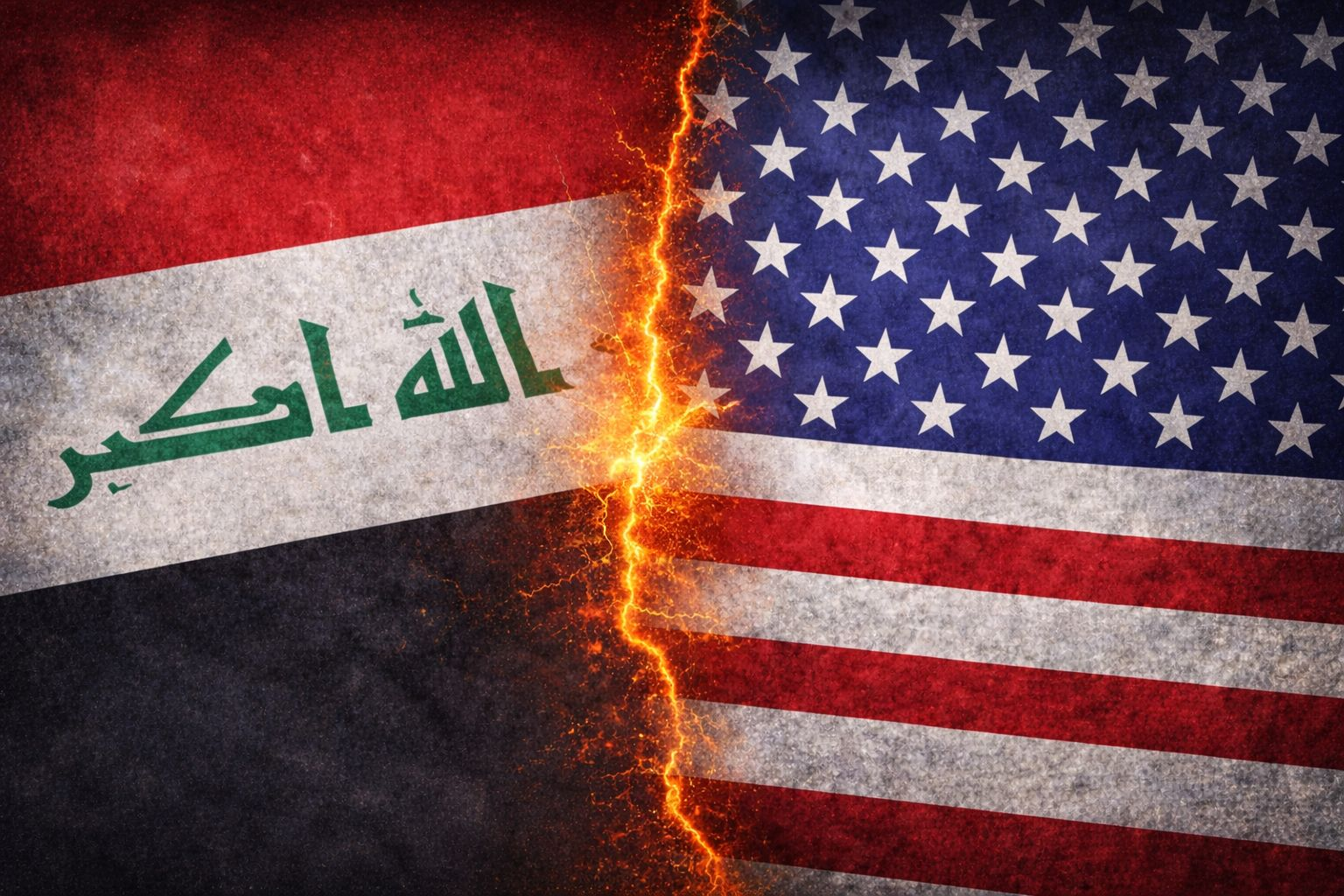
The Crisis in U.S.-Iraqi Relations: An Assessment of Opportunities and Risks
Executive Summary
US-Iraqi relations in early 2026 have entered a sensitive transitional phase, following the official announcement of the completion of the withdrawal of the international coalition forces led by the United States from military bases on Iraqi territory, and the transformation of the relationship into bilateral security and political frameworks, while maintaining a limited and temporary American presence in the Kurdistan Region. This transformation coincides with a very sensitive regional circumstance, led by the repercussions of the collapse of the security system in northeastern Syria, especially in relation to the file of ISIS prisons and camps, and the escalating possibility of cross-border threat infiltration.
This estimate argues that Iraq today faces a rare sovereign opportunity to redefine its relationship with Washington, but at the same time it faces a package of complex risks, including a potential security vacuum, conflicting regional pressures, and internal challenges associated with unity of decision and a state monopoly on weapons. The estimate concludes that Baghdad’s success in managing this stage remains dependent on the adoption of the “flexible independence” approach, which balances between ending the pattern of direct military partnership and maintaining disciplined security-economic cooperation, while activating the Strategic Framework Agreement for Friendship and Cooperation between the Republic of Iraq and the United States of America signed in 2008, leading to a balanced partnership that serves Iraqi interests and prevents the country from sliding towards instability paths.
First: Describing the current situation
- Transformation in American Presence: From International Alliance to Bilateral Partnership
In mid-January 2026, the Iraqi government announced the completion of the withdrawal of international coalition forces from military bases in the federal areas, and the full handover of their administration to Iraqi forces, including the Ain al-Assad air base, in a move that practically ended the immediate US military presence in central and southern Iraq.
This shift came based on the understandings announced since 2024 on the termination of the coalition mission, while maintaining a bilateral security cooperation formula, and a limited consultative presence in the Kurdistan Region until September 2026 no later than September 2026.
- Legal and political framework of the relationship
Despite the termination of the military mission, the relationship between Baghdad and Washington is still governed by the Strategic Framework Agreement signed in 2008, which covers areas of political, economic, security and cultural cooperation. Joint statements from the meetings of the High Coordination Committee during 2024 confirmed the intention of the parties to move from the logic of the “military alliance” to the broader “bilateral partnership”, with a focus on financial reform, the energy sector, and capacity building.
- Regional compressive environment
The withdrawal coincides with dangerous developments in the Syrian arena, most notably the decline in the control of the Syrian Democratic Forces over a number of prisons and camps that include ISIS elements and families, and the accompanying escape of hundreds of detainees, and the withdrawal of these forces from vital sites such as Al-Hol camp.
These developments have returned the ISIS file to the forefront of the regional threat, and put Iraq in a direct line of contact with the repercussions of insecurity across its western borders.
- Possible security vacuum in central and southern Iraq
The American withdrawal from central and southern Iraq may lead to a security vacuum that may be filled by ISIS sleeper cells or pro-Iranian armed factions, as specialized political reports and analysis have warned.
Second: The connotations of the event – why is it articulated?
- An actual test of Iraqi sovereignty
The Iraqi state will bear full responsibility for the security of its territory without a foreign combat umbrella, making security performance a direct standard of the state’s merit and its ability to impose its sovereignty.
- Complexity of the regional security equation
The overlap between the Iraqi and Syrian arenas, especially in the terrorism file, means that any defect in one of them will immediately reflect on the other, in light of the decline of direct international roles in managing this threat.
- Redistribution of internal influence
The withdrawal of US forces has rearranged the balance of power between local actors, especially between state institutions and armed factions, putting the issue of arms monopoly at the heart of the upcoming political challenge.
Third: Engines – Who is the beneficiary and who is the victim?
Potential beneficiaries
- Kurdistan Region of Iraq: The continuation of the temporary American presence gives the region a strategic security margin and political capital in negotiation with Baghdad.
- Rival regional powers for Washington: Reducing the U.S. presence in central and southern Iraq opens up a wider scope for indirect influence.
- Armed factions: The exit of foreign forces from the federal regions reduces direct restrictions on their movement, despite continued political pressures.
Potentially affected
- The Iraqi government bears the greatest burden in controlling security and preventing slippage, without direct international cover.
- Civil and secular forces: The decline in international pressure may reduce the indirect protection of civil society in the face of factions.
- The United States: Loses part of its ability to direct field influence and monitor regional activities.
- Iran: Despite being considered a beneficiary of the exit of the United States, the presence of American forces was a pressure paper in the hands of Tehran, waving to attack them from time to time, and with the withdrawal of these forces, Iran lost one of the tools of pressure in its confrontation with Washington.
Fourth: Possible scenarios
- Weighted scenario: fragile equilibrium
Baghdad continues to pursue a policy of “decisive balance” between Washington and Tehran, maintaining a limited bilateral security partnership, intelligence and training cooperation with the United States, and relative control over the behavior of the factions, while the threat of ISIS remains within levels that can be contained.
This scenario is based on the Iraqi-American joint statement issued in September 2024, which confirmed the desire of the two parties to strengthen relations and develop security assistance within the framework of the strategic agreement, as well as the indicators of restraint shown by the factions during the crises of 2025, leading to the announcement of the readiness of a number of them to review their roles or disarmament.
- The Excluded Scenario: Full American Engagement
The return of a large-scale US military deployment inside Iraq, a low-probability scenario in light of the American political mood, the internal Iraqi rejection, and the cost of previous experience.
- Catastrophic scenario: security collapse
The collapse of the fragile balance results from the convergence of three factors: the escalation of ISIS activity from Syria, internal conflict among factions, and external economic or financial pressures. Despite its high cost, this scenario remains possible if the transition management fails.
Fifth: Risks and opportunities
Main risks
- The return of ISIS benefiting from the developments in Syria.
- The growing Iranian influence and the influence of the armed factions at the expense of state institutions.
- Financial pressures and penalties in the event of Baghdad’s deviation from the balance path.
- The escalation of internal polarization ahead of the ongoing process of sharing quotas to form the government.
Available Opportunities
- Strengthening national sovereignty by building an independent security system.
- Redefining the relationship with Washington on economic, energy and developmental grounds.
- Reforming the security sector, confining weapons to the state, and integrating the factions into their official frameworks after losing the pretext they were arguing, which is the presence of coalition forces.
- Expanding the margin of regional maneuvering and building balanced relations with neighboring countries.
- Opening the way for civil and secular forces, making this stage an entrance to end political alienation, and recording the presence and influence of new forces capable of putting forward realistic ideas about the state, as reshaping the relationship with Washington and strengthening national sovereignty requires the involvement of political and social forces capable of providing alternative visions.
Sixth: Practical recommendations for decision makers
- Stabilizing the bilateral partnership framework with Washington, activating the strategic framework agreement through the economy and energy portal, and transferring the weight of the relationship from security to electricity and long-term investment.
- Preventing the vacuum in areas vacated by the coalition forces by deploying selected and trained Iraqi units in previous bases, with intelligence support.
- Managing the ISIS file as a cross-border threat, not just an internal security issue, through the establishment of a national coordination cell for the western border file and the prisons and camps of northern Syria.
- Controlling the behavior of outlaw factions and gradually reconsidering the concept of the state’s monopoly on weapons.
- Proactively fortify the financial system by promoting banking compliance and transparency to reduce the risk of external sanctions or restrictions.
- Keep regional calm channels open and manage an active balance with regional actors to prevent Iraq from turning into an arena for liquidating conflicts.
The final conclusion
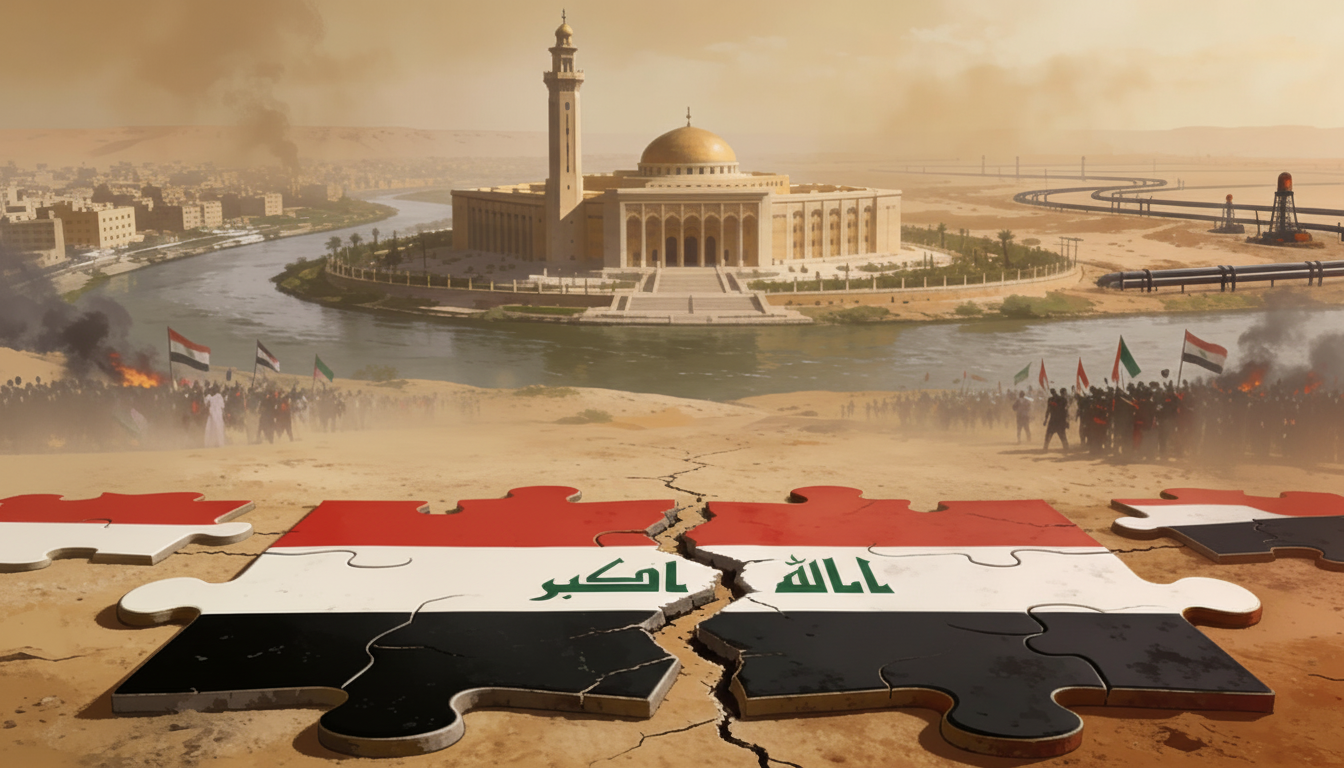
Iraq today stands at a historic crossroads. The American withdrawal does not mean the end of the relationship with Washington, but the end of another model and beginning. Success at this stage requires a conscious transition from the discourse of “solid sovereignty” to the practice of “flexible sovereignty”. Sovereignty protects national decision-making without isolating Iraq from networks of international cooperation, and strikes a balance between inside and outside without subordinating to any external party.
Managing this moment as an opportunity for re-establishment, not just a security vacuum, will determine whether Iraq emerges from this phase as a more cohesive and independent state or as an open arena for liquidating others’ struggles.
Share This Article!
Disclaimer: The views and opinions expressed in the content are solely those of the authors and do not necessarily reflect the Direct Policy Center’s position.Copyright: We allow sharing of links to our published research articles and analyses (otherwise protected by intellectual property (rights) on the condition that their content is not copied, wholly or partially, republished elsewhere, or reproduced in any form without the prior consent of the Direct Policy Center. All rights reserved © 2025
The Crisis in U.S.-Iraqi Relations: An Assessment of Opportunities and Risks
Executive Summary
US-Iraqi relations in early 2026 have entered a sensitive transitional phase, following the official announcement of the completion of the withdrawal of the international coalition forces led by the United States from military bases on Iraqi territory, and the transformation of the relationship into bilateral security and political frameworks, while maintaining a limited and temporary American presence in the Kurdistan Region. This transformation coincides with a very sensitive regional circumstance, led by the repercussions of the collapse of the security system in northeastern Syria, especially in relation to the file of ISIS prisons and camps, and the escalating possibility of cross-border threat infiltration.
This estimate argues that Iraq today faces a rare sovereign opportunity to redefine its relationship with Washington, but at the same time it faces a package of complex risks, including a potential security vacuum, conflicting regional pressures, and internal challenges associated with unity of decision and a state monopoly on weapons. The estimate concludes that Baghdad’s success in managing this stage remains dependent on the adoption of the “flexible independence” approach, which balances between ending the pattern of direct military partnership and maintaining disciplined security-economic cooperation, while activating the Strategic Framework Agreement for Friendship and Cooperation between the Republic of Iraq and the United States of America signed in 2008, leading to a balanced partnership that serves Iraqi interests and prevents the country from sliding towards instability paths.
First: Describing the current situation
- Transformation in American Presence: From International Alliance to Bilateral Partnership
In mid-January 2026, the Iraqi government announced the completion of the withdrawal of international coalition forces from military bases in the federal areas, and the full handover of their administration to Iraqi forces, including the Ain al-Assad air base, in a move that practically ended the immediate US military presence in central and southern Iraq.
This shift came based on the understandings announced since 2024 on the termination of the coalition mission, while maintaining a bilateral security cooperation formula, and a limited consultative presence in the Kurdistan Region until September 2026 no later than September 2026.
- Legal and political framework of the relationship
Despite the termination of the military mission, the relationship between Baghdad and Washington is still governed by the Strategic Framework Agreement signed in 2008, which covers areas of political, economic, security and cultural cooperation. Joint statements from the meetings of the High Coordination Committee during 2024 confirmed the intention of the parties to move from the logic of the “military alliance” to the broader “bilateral partnership”, with a focus on financial reform, the energy sector, and capacity building.
- Regional compressive environment
The withdrawal coincides with dangerous developments in the Syrian arena, most notably the decline in the control of the Syrian Democratic Forces over a number of prisons and camps that include ISIS elements and families, and the accompanying escape of hundreds of detainees, and the withdrawal of these forces from vital sites such as Al-Hol camp.
These developments have returned the ISIS file to the forefront of the regional threat, and put Iraq in a direct line of contact with the repercussions of insecurity across its western borders.
- Possible security vacuum in central and southern Iraq
The American withdrawal from central and southern Iraq may lead to a security vacuum that may be filled by ISIS sleeper cells or pro-Iranian armed factions, as specialized political reports and analysis have warned.
Second: The connotations of the event – why is it articulated?
- An actual test of Iraqi sovereignty
The Iraqi state will bear full responsibility for the security of its territory without a foreign combat umbrella, making security performance a direct standard of the state’s merit and its ability to impose its sovereignty.
- Complexity of the regional security equation
The overlap between the Iraqi and Syrian arenas, especially in the terrorism file, means that any defect in one of them will immediately reflect on the other, in light of the decline of direct international roles in managing this threat.
- Redistribution of internal influence
The withdrawal of US forces has rearranged the balance of power between local actors, especially between state institutions and armed factions, putting the issue of arms monopoly at the heart of the upcoming political challenge.
Third: Engines – Who is the beneficiary and who is the victim?
Potential beneficiaries
- Kurdistan Region of Iraq: The continuation of the temporary American presence gives the region a strategic security margin and political capital in negotiation with Baghdad.
- Rival regional powers for Washington: Reducing the U.S. presence in central and southern Iraq opens up a wider scope for indirect influence.
- Armed factions: The exit of foreign forces from the federal regions reduces direct restrictions on their movement, despite continued political pressures.
Potentially affected
- The Iraqi government bears the greatest burden in controlling security and preventing slippage, without direct international cover.
- Civil and secular forces: The decline in international pressure may reduce the indirect protection of civil society in the face of factions.
- The United States: Loses part of its ability to direct field influence and monitor regional activities.
- Iran: Despite being considered a beneficiary of the exit of the United States, the presence of American forces was a pressure paper in the hands of Tehran, waving to attack them from time to time, and with the withdrawal of these forces, Iran lost one of the tools of pressure in its confrontation with Washington.
Fourth: Possible scenarios
- Weighted scenario: fragile equilibrium
Baghdad continues to pursue a policy of “decisive balance” between Washington and Tehran, maintaining a limited bilateral security partnership, intelligence and training cooperation with the United States, and relative control over the behavior of the factions, while the threat of ISIS remains within levels that can be contained.
This scenario is based on the Iraqi-American joint statement issued in September 2024, which confirmed the desire of the two parties to strengthen relations and develop security assistance within the framework of the strategic agreement, as well as the indicators of restraint shown by the factions during the crises of 2025, leading to the announcement of the readiness of a number of them to review their roles or disarmament.
- The Excluded Scenario: Full American Engagement
The return of a large-scale US military deployment inside Iraq, a low-probability scenario in light of the American political mood, the internal Iraqi rejection, and the cost of previous experience.
- Catastrophic scenario: security collapse
The collapse of the fragile balance results from the convergence of three factors: the escalation of ISIS activity from Syria, internal conflict among factions, and external economic or financial pressures. Despite its high cost, this scenario remains possible if the transition management fails.
Fifth: Risks and opportunities
Main risks
- The return of ISIS benefiting from the developments in Syria.
- The growing Iranian influence and the influence of the armed factions at the expense of state institutions.
- Financial pressures and penalties in the event of Baghdad’s deviation from the balance path.
- The escalation of internal polarization ahead of the ongoing process of sharing quotas to form the government.
Available Opportunities
- Strengthening national sovereignty by building an independent security system.
- Redefining the relationship with Washington on economic, energy and developmental grounds.
- Reforming the security sector, confining weapons to the state, and integrating the factions into their official frameworks after losing the pretext they were arguing, which is the presence of coalition forces.
- Expanding the margin of regional maneuvering and building balanced relations with neighboring countries.
- Opening the way for civil and secular forces, making this stage an entrance to end political alienation, and recording the presence and influence of new forces capable of putting forward realistic ideas about the state, as reshaping the relationship with Washington and strengthening national sovereignty requires the involvement of political and social forces capable of providing alternative visions.
Sixth: Practical recommendations for decision makers
- Stabilizing the bilateral partnership framework with Washington, activating the strategic framework agreement through the economy and energy portal, and transferring the weight of the relationship from security to electricity and long-term investment.
- Preventing the vacuum in areas vacated by the coalition forces by deploying selected and trained Iraqi units in previous bases, with intelligence support.
- Managing the ISIS file as a cross-border threat, not just an internal security issue, through the establishment of a national coordination cell for the western border file and the prisons and camps of northern Syria.
- Controlling the behavior of outlaw factions and gradually reconsidering the concept of the state’s monopoly on weapons.
- Proactively fortify the financial system by promoting banking compliance and transparency to reduce the risk of external sanctions or restrictions.
- Keep regional calm channels open and manage an active balance with regional actors to prevent Iraq from turning into an arena for liquidating conflicts.
The final conclusion
Iraq today stands at a historic crossroads. The American withdrawal does not mean the end of the relationship with Washington, but the end of another model and beginning. Success at this stage requires a conscious transition from the discourse of “solid sovereignty” to the practice of “flexible sovereignty”. Sovereignty protects national decision-making without isolating Iraq from networks of international cooperation, and strikes a balance between inside and outside without subordinating to any external party.
Managing this moment as an opportunity for re-establishment, not just a security vacuum, will determine whether Iraq emerges from this phase as a more cohesive and independent state or as an open arena for liquidating others’ struggles.
Share This Article!
Disclaimer: The views and opinions expressed in the content are solely those of the authors and do not necessarily reflect the Direct Policy Center’s position.Copyright: We allow sharing of links to our published research articles and analyses (otherwise protected by intellectual property (rights) on the condition that their content is not copied, wholly or partially, republished elsewhere, or reproduced in any form without the prior consent of the Direct Policy Center. All rights reserved © 2025